

Why loops aren’t the problem, and what your students can learn from Ravel, Ethan Lam, and a vocal sample called “Don’t Let Me Down”.
There’s a widely held view among music teachers that using loops in compositions is a shortcut. That it’s lazy. That it doesn’t count as “real” composing. I understand where this comes from, and I’ve probably said similar things myself at various points over the years. But I’ve come to think the issue isn’t loops themselves. It’s repetition without development.
And those are two very different things.
Ravel did it first
Before we talk about EDM, it’s worth remembering that the idea of repeating a musical idea over and over isn’t new. Ravel’s Bolero is built on a rhythmic ostinato, the same snare drum pattern repeated throughout the entire piece for about 15 minutes. On paper, it sounds like it should be unbearably boring. But it isn’t, because Ravel is constantly changing everything around that rhythmic figure: dynamics build from almost nothing to a massive orchestral climax, the texture thickens as new instruments are layered in, melodies are passed between different timbres, and harmonic tension gradually accumulates underneath.
The repeating rhythm is not the weakness of Bolero. It’s the foundation. And it’s the same principle that makes loops work in electronic music.
What a loop actually does in a composition
In EDM, a loop can serve the same purpose as a melodic hook in a pop song. It gives the listener’s ear something to latch onto. It provides structural stability and a sense of familiarity that holds the track together.
This is actually a really important point, because many students who compose electronically struggle with melody. They can build solid drum patterns and basslines, they can design interesting synth textures, but producing a strong melodic idea is often the toughest part. Their tracks end up sounding like backing tracks: rhythmically and harmonically solid, but missing that key element that makes a piece feel complete. A well-chosen loop can fill this gap, giving the track a focal point that ties everything else together.
The problem comes when students drop a loop in and leave it untouched for three minutes. That is repetitive. But the solution isn’t to ban loops. It’s to teach students how to develop them.
How to make a loop interesting
There are many production techniques students can use to transform a loop so that it stays engaging throughout a track. These are the same techniques professional producers use every day.
Slicing and chopping is one of the most effective. Rather than playing the full loop every time, students can cut it up rhythmically, triggering fragments of the loop at different points to create variation. This keeps the familiar sound but disrupts the predictability.
Pitch shifting the loop, or parts of it, introduces changes in melodic contour. Even subtle shifts up or down can make repeated material feel like it’s going somewhere new.
Effects processing opens up a huge range of possibilities. Applying delay or reverb at different points creates a sense of space and movement. EQ filter sweeps, where you gradually open or close a filter across the frequency spectrum, produce timbral changes that keep the ear engaged even when the underlying notes haven’t changed. This is one of the most powerful tools in electronic production and something students can learn to use very quickly.
Arrangement matters too. Just as Ravel changes what’s happening around his rhythmic ostinato, students can vary the instrumentation, dynamics and texture surrounding the loop. Stripping everything back to just the loop and a simple beat, then gradually building other elements back in, creates contrast and momentum.
A student who gets it right
One of my Year 13 students, Ethan Lam, has produced a track that is one of the best examples I’ve seen from a New Zealand high school student of how to use loops effectively. Have a listen:
As you listen, try counting the number of times you hear the “Don’t Let Me Down” vocal loop, or a variation of it. I haven’t counted precisely, but I think it’s well over a hundred.
And yet, does the track sound too repetitive? Some may say yes, but I believe most listeners will say no. Keeping in mind that Ethan is still a high school student and not a professional music producer (yet!), I think this is a remarkable piece of work.
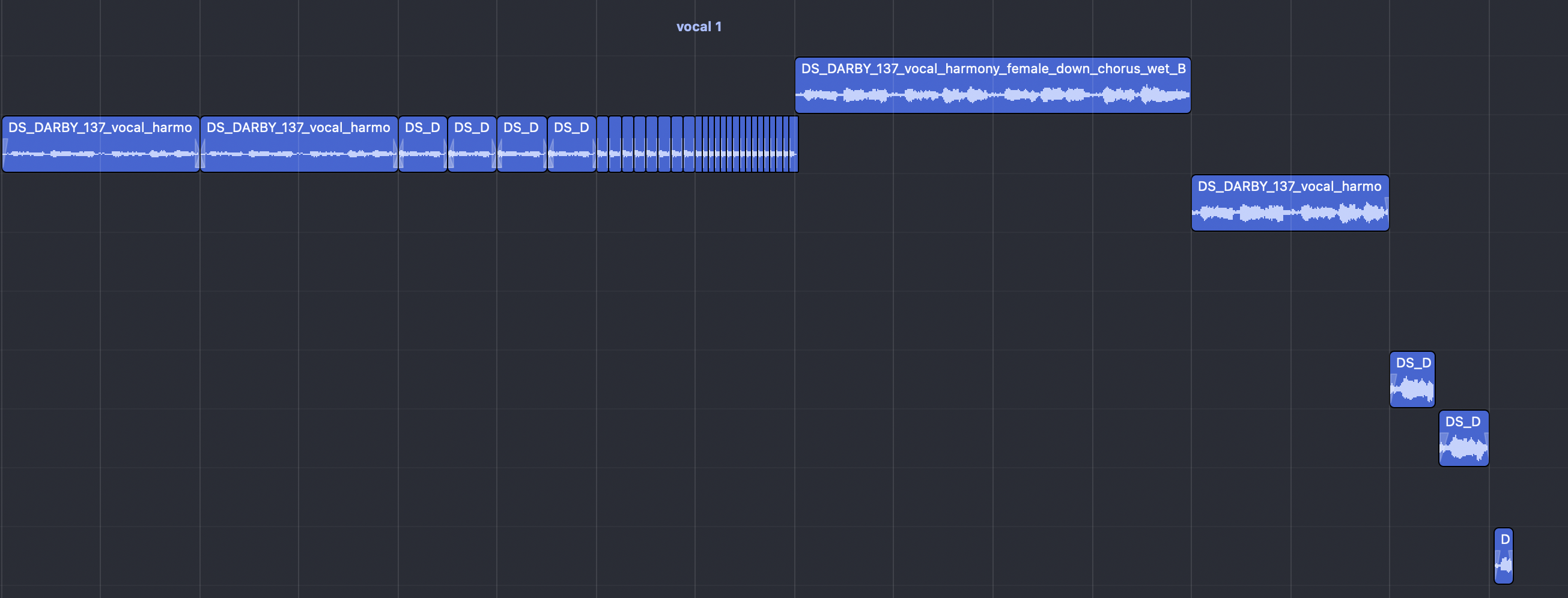
It’s worth diving into what makes this so successful. This track, like many EDM tracks, doesn’t have a melody in the traditional sense. There’s no series of lyrics to sing along with (apart from the loop itself), no use of sequence or extensive melodic decoration. But I’d argue that Ethan’s use of the loop fulfils exactly the same purpose as a traditional melody. It gives the ear a hook to focus on and provides structural stability. Without it, the track would sound like what so many school compositions in this genre end up being: a backing track of solid rhythmic and bass ideas, but lacking that essential focal point.
What sets Ethan apart from students who have given loops a bad name is the sheer variety of ways he alters the loop. You get a sense of structural certainty from the repetition, but alongside that repetition there is constant development: rhythmic slicing, heavy use of delay and reverb, EQ filter sweeps that create timbral change, and pitch shifting that introduces genuine melodic variation.

If you look at the screenshot of his Logic Pro session, you can see many of these techniques in action through how he’s edited and arranged the loop using the tools in his DAW. But I’d encourage you to do a really close listen to the track and list all the ways he has altered the loop to keep listeners engaged.

And while you’re digging into the detail of his techniques, don’t forget to step back and look at the big picture. Everything Ethan does with the loop serves a larger purpose: making sure the track takes us on a musical journey. He’s teaching us something about art and music. He didn’t create this piece for NCEA credits. He created it to inspire listeners and connect with them.
The unaltered loop would not have achieved this. It would have become boring and predictable. Every good musical idea can turn into a bad one if it’s repeated without development, but Ethan manages to find a really effective balance.
Teaching loops well
So rather than telling students they can’t use loops, I’d encourage us to teach them how to use loops. The techniques I’ve described above, slicing, pitch shifting, effects processing, and thoughtful arrangement, are all practical skills that can be taught in a DAW. They are the same skills that apply to developing any musical idea, whether it comes from a loop library or from a student’s own imagination.
If you’re looking for structured resources to help teach EDM composition in your classroom, including how to use these production techniques, I’ve developed a 40-lesson curriculum called How to Compose… EDM. Each lesson comes with a teacher guide, a student handout, and a video tutorial I’ve created demonstrating and explaining the key concepts. The videos mean you don’t need to be an expert before you start, and they cover everything from drum programming and synthesis through to arrangement and mixing. You can find it at www.learningideas.org.

